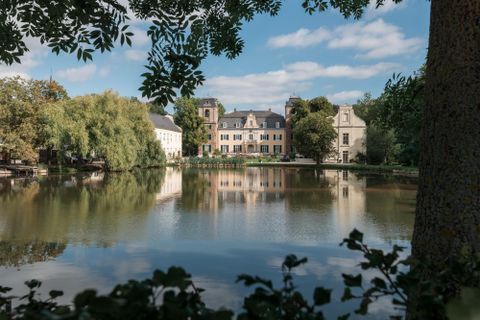
Burg Flamersheim
EuskirchenOpen today
Today there is an excellent inn, bistro and hotel with 5 rooms.
Today there is an excellent inn, bistro and hotel with 5 rooms.
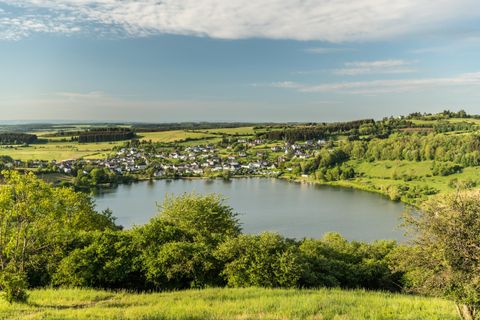
Especially if you visit the GesundLand Vulkaneifel in summer, a detour to the Schalkenmehren Maar is a must. Located directly at the village of the same name and opposite the Weinfelder Maar, the Schalkenmehrener Maar is one of the three Dauner Maars and offers a wonderful backdrop for an extended walk or an extensive hike. If you look closely, you can see that the Schalkenmehren Maar was once a double maar, formed by volcanic activity around 20,000 to 30,000 years ago. But the tuffs of the western maar filled up the eastern maar funnel, so that nothing can be seen of the second maar today, except for the fen vegetation that has spread in this area. Take a little discovery tour and observe numerous animal and plant species along the way!
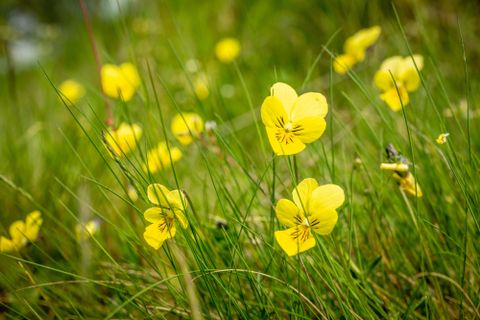
The unique galmei violet in and around Stolberg is particularly evident from May to August. Galmeiflora or galmei vegetation is the botanical name of two plant communities of metallophytes on soil containing heavy metals.
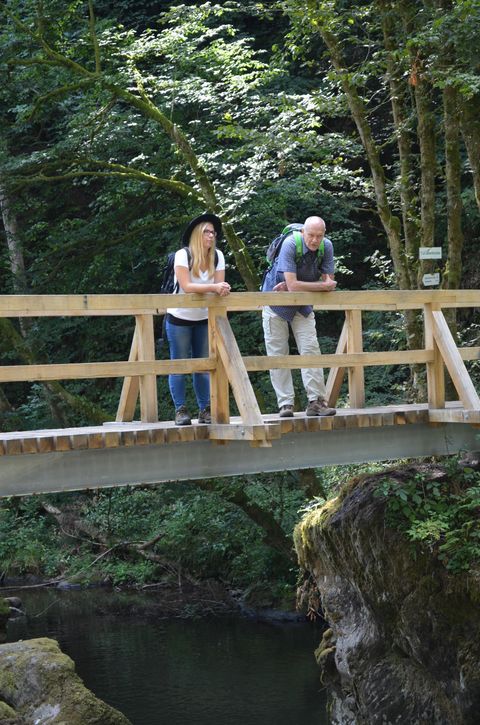
The Germanic bridge over the Kleine Kyll is part of the Kleine Kyll and Punkt 4 mindfulness path on the way and stands for inspiration.
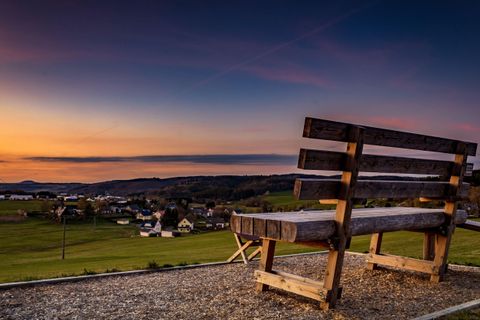
Enjoy the view and let your feet dangle.
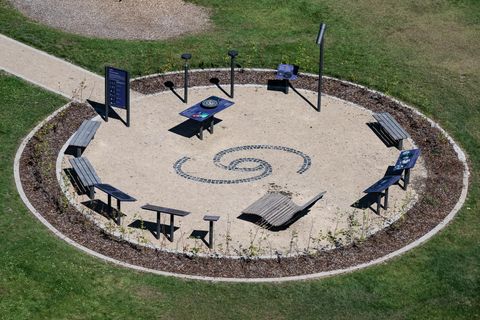
The Ten Stargazes are places where you can observe the impressive night sky. They are easy to reach and perfectly equipped for an astronomical voyage of discovery on your own. Exciting information and suitable installations help to deepen the fascination of stargazing. Each Stargaze has been given its own theme. There, a variety of aspects of astronomy and nocturnal nature as well as local peculiarities are shown.
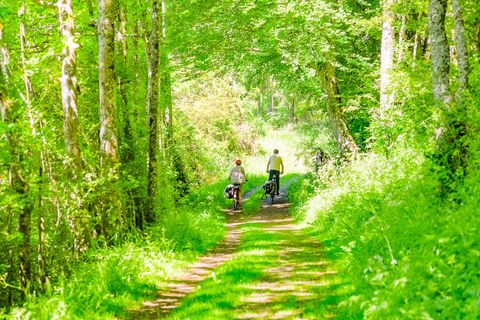
Juniper reserveJuniperus communis heath and grassland with isolated juniper up to 1.5m high on an area of about 1 hectare. East of the local situation of Zermüllen on the Müllenberg. [Rita Gehendges: Natural Monuments of the Daun County] Historical Landscape Pictures The Eifel in the Heath and Juniper Dress of the 19th Century Werner Schwind, Gerolstein The landscape of the Eifel has changed significantly in the last 100 to 150 years. Meadow improvements, wasteland afforestation, conversion of deciduous to coniferous forests, mining or mining of volcanic mountains and last but not least road and housing construction have given the Eifel a new face.
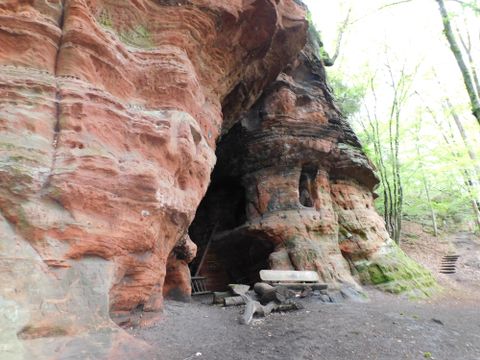
Visit the Klausenhöhle ( cave) on the Premium hiking trail ``Römerpfad`` and let the past come back to life. According to legends, a hermit lived in the cave in the 18th century.
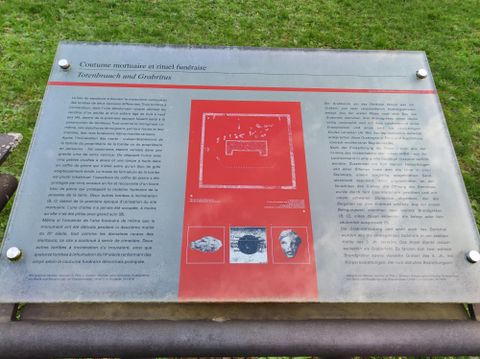
This considerable tomb from Roman times was excavated in the years 1972/73 and then restored. Both reliefs with mythological scenes as well as pictures from the everyday life of the builder's family are shown.
The St. Martin Spring is a sodium-calcium-hydrogen-carbonate acidulous water and was formerly classified as medicinal water.