Copyright: Städteregion Aachen, Dominik Ketz
Trockenschäden & Baumsterben – der Wald kämpft ums Überleben
Stolberg
Water is the basis of all life – even in the forest. If rain is absent, trees close their stomata to conserve water. However, this also means they hardly absorb any CO₂. Photosynthesis slows down, and energy is lacking for new shoots, roots, and defense mechanisms.
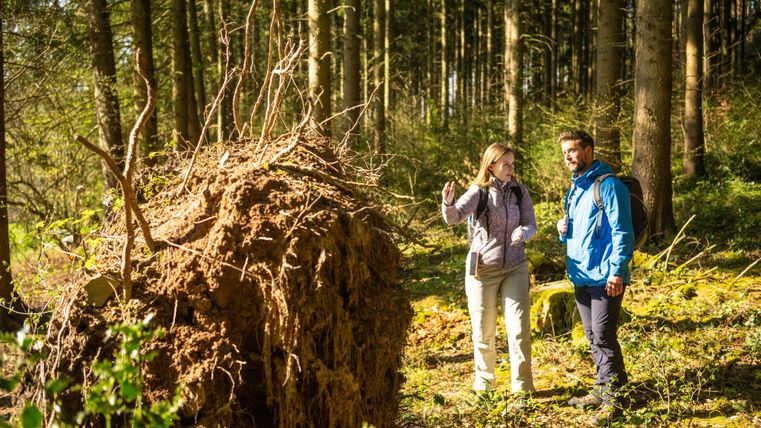
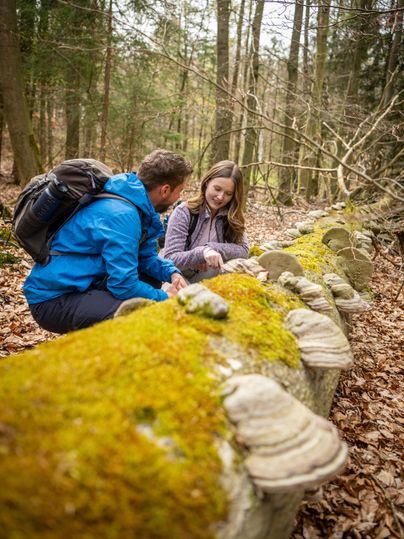
If the drought persists, conductive tissues and fine roots dry out. The crowns thin out, and branches die. Shallow-rooting species such as spruces are particularly affected. Since they can hardly reach deeper water layers, they become susceptible to bark beetles and fungi. Deep-rooting species like oak or hornbeam, on the other hand, cope better with drought. They are considered "trees of the future" – more resilient and stable against climate change.
Feeling like a little stress test? As you continue walking, pay attention to discolored crowns, sawdust, or resin excretion – typical signs of how hard the forest is currently working to survive.
If the drought persists, conductive tissues and fine roots dry out. The crowns thin out, and branches die. Shallow-rooting species such as spruces are particularly affected. Since they can hardly reach deeper water layers, they become susceptible to bark beetles and fungi. Deep-rooting species like oak or hornbeam, on the other hand, cope better with drought. They are considered "trees of the future" – more resilient and stable against climate change.
Feeling like a little stress test? As you continue walking, pay attention to discolored crowns, sawdust, or resin excretion – typical signs of how hard the forest is currently working to survive.
Impressions

Contact
Rundweg Venwegen
52224 Stolberg