Froschschacht
Stolberg
Last reminder of the Diepenlinchen mine
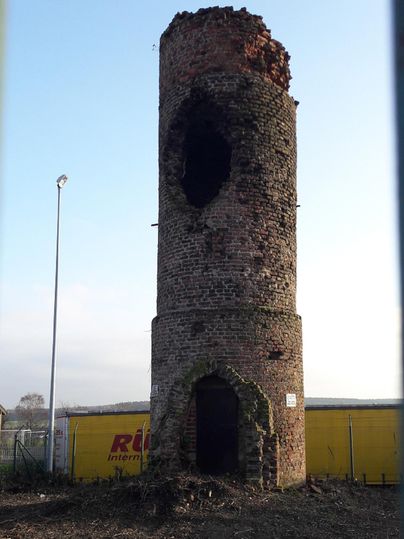
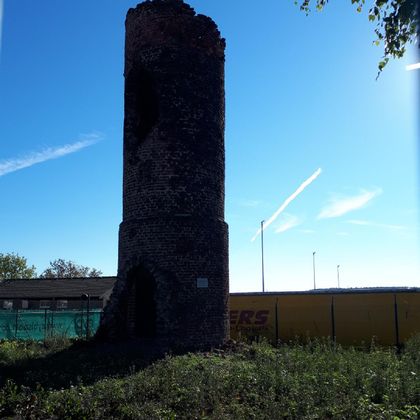
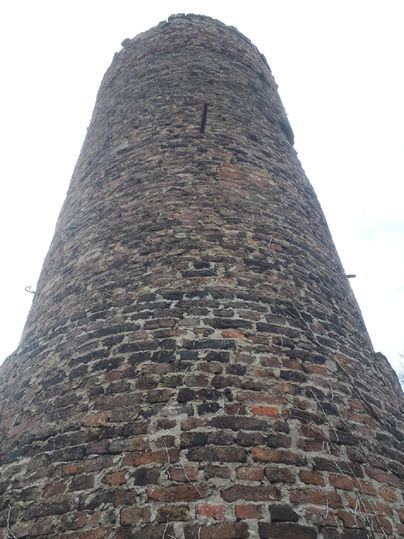
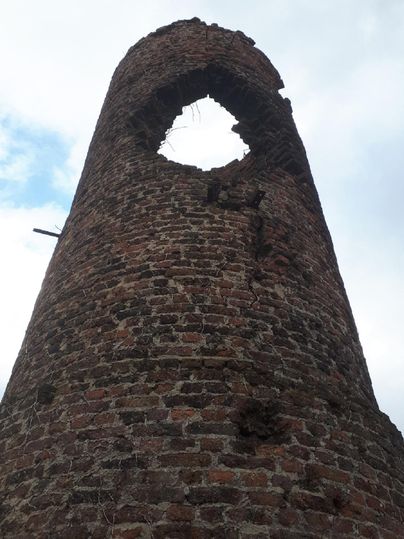
The chimney-like structure of the Froschschacht is the most significant relic with a visible connection to the Diepenlinchen ore mine. In contrast to all the other shafts that still exist underground, this ventilation shaft can be recognized by its still existing and clearly visible structure.
Due to its round shape, this shaft structure is very similar to an industrial chimney of only a small height. The ventilation shaft was used to ventilate the underground tunnels and galleries. The "Froschschacht" probably derives its name from "am Frösch", as this is how a concession on which two men were working was referred to in mining jury documents from 1820.
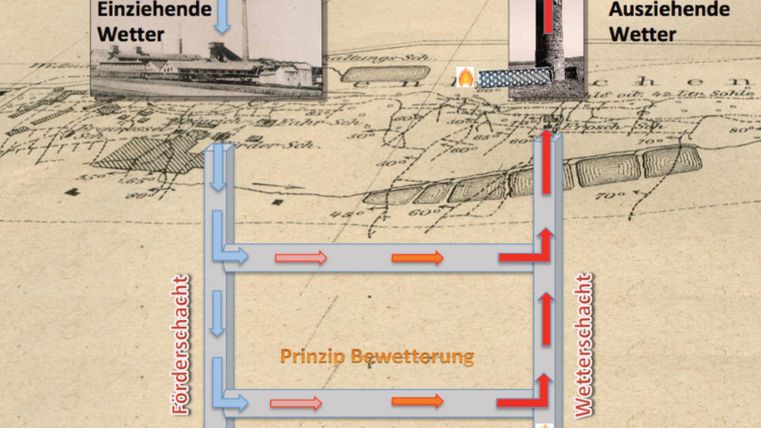
The purpose of the Froschschacht is to remove used air (waste air from the extracting mines). Ventilation removes the CO₂ that constantly escapes from the limestone of the mine body, which would otherwise have led to fatal gas concentrations, particularly in the deeper parts of the mine. The shaft initially had a depth of 252 m and was sunk to 360 m after further expansion stages.
The chimney of the Froschschacht was restored in 2020.
In principle, cold and heavy fresh air sinks, while warmer and lighter exhaust air rises. There are at least two ways to achieve good ventilation:
The old method: a fire was maintained at the bottom of the frog shaft using old mine wood, which intensified the natural chimney effect of the ventilating weather shaft.
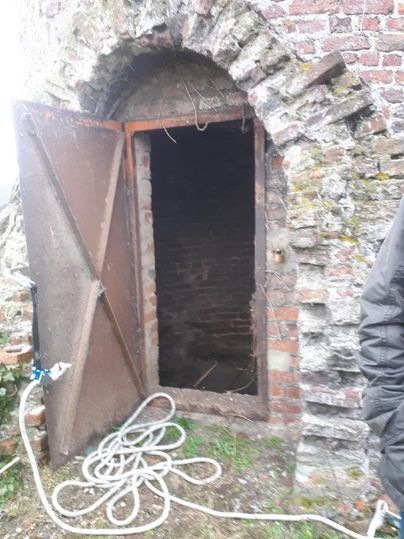
The more modern method: Warm air was fed to the above-ground frog shaft chimney via a man-high brick tunnel from a weathering furnace located in an outbuilding. Remains of the man-sized tunnel can still be seen today at the foot of the frog shaft.
In the early days of the mine, the fire at the bottom of the shaft was probably the simplest, but also the dirtiest solution. However, as the mine quickly developed into one of the most modern ore mines, a weathering furnace was set up in the mine, which was maintained with old wood. Its task was to heat the fresh air, which had previously coated the individual operating points, and thereby speed up the extraction through the air shaft.
(Text: Jens Mieckley)
Impressions

Contact
Montanhistorischer Rundweg
52224 Stolberg