Copyright: Städteregion Aachen, Dominik Ketz
Das Lütgens – vom Fuhrhof zur Weberei
Roetgen
On the old country road stands a property that is as old as the history of the Roetgen weaving mill itself and is now set to become something new.
In 1763, Johann Peter Kaufmann had his carriage house built here on the main road - in honour of his wife Anna Lütgen. The property was later expanded: a weaving and dyeing mill was built where Kasimir fabrics were produced.
In the 19th century, Lütgens was one of the most productive businesses in the village. Over a hundred hundred quintals of wool were processed here every year. With the decline of the cloth industry, the building lost its function, but it was preserved as part of Roetgen's cultural memory.
Today, the local history and heritage association is planning to convert the building into a civic and meeting place. This closes the circle: a place of work becomes a place to come together - and the history of the weavers remains alive.
In 1763, Johann Peter Kaufmann had his carriage house built here on the main road - in honour of his wife Anna Lütgen. The property was later expanded: a weaving and dyeing mill was built where Kasimir fabrics were produced.
In the 19th century, Lütgens was one of the most productive businesses in the village. Over a hundred hundred quintals of wool were processed here every year. With the decline of the cloth industry, the building lost its function, but it was preserved as part of Roetgen's cultural memory.
Today, the local history and heritage association is planning to convert the building into a civic and meeting place. This closes the circle: a place of work becomes a place to come together - and the history of the weavers remains alive.
Impressions

Contact
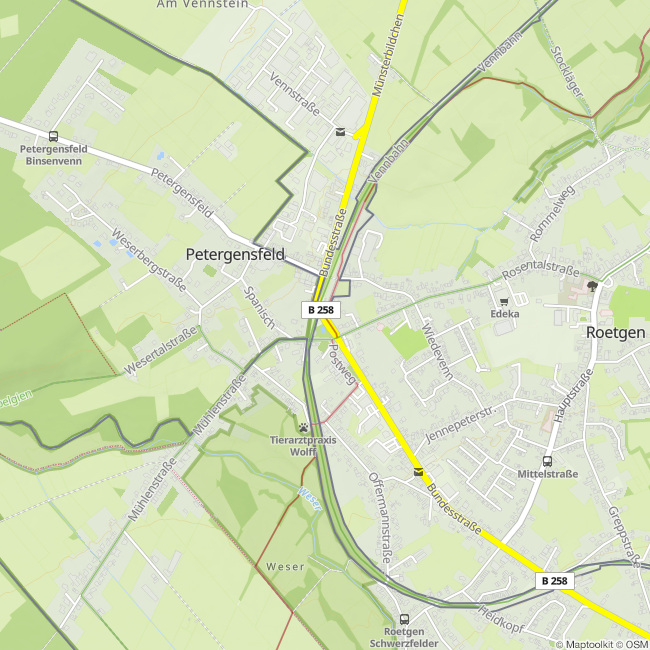
Weberweg
52159 Roetgen